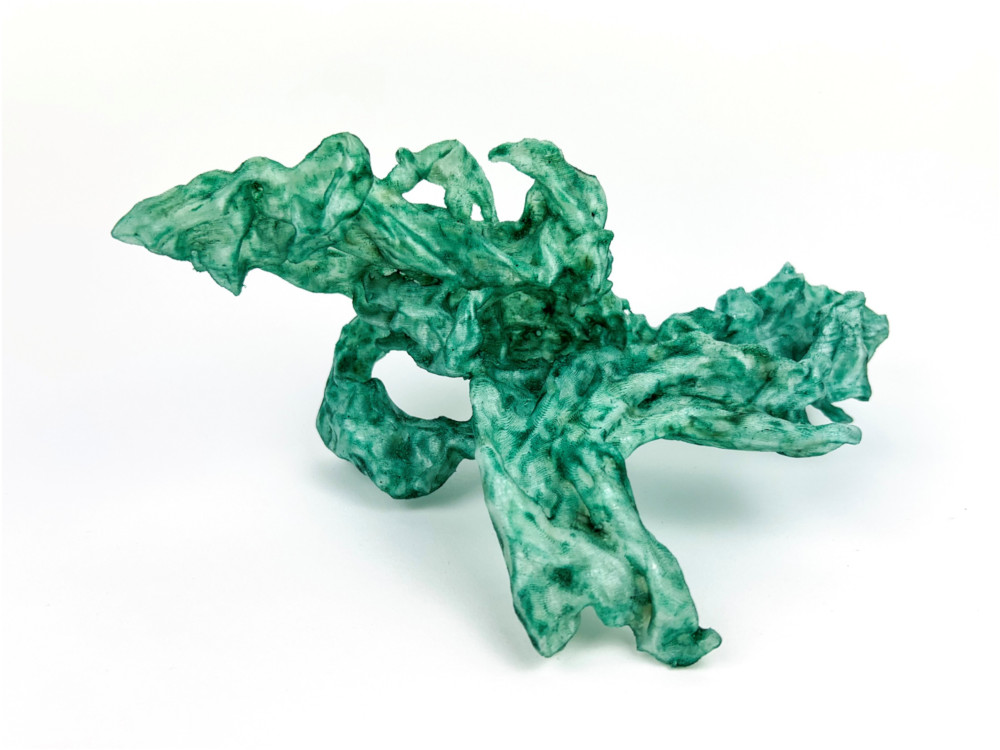
Knowledge from Nostoc #1
3D printed translucent PLA, cyanobacterial varnish
13 x 31 x 23 cm
2026
The ‘Knowledge from Nostoc’ series are sculptures that are co-crested with cyanobacterial colonies as living partners. The works reveal the complex forms of terrestrial colonies, with waves and folds reminiscent of Baroque drapery.
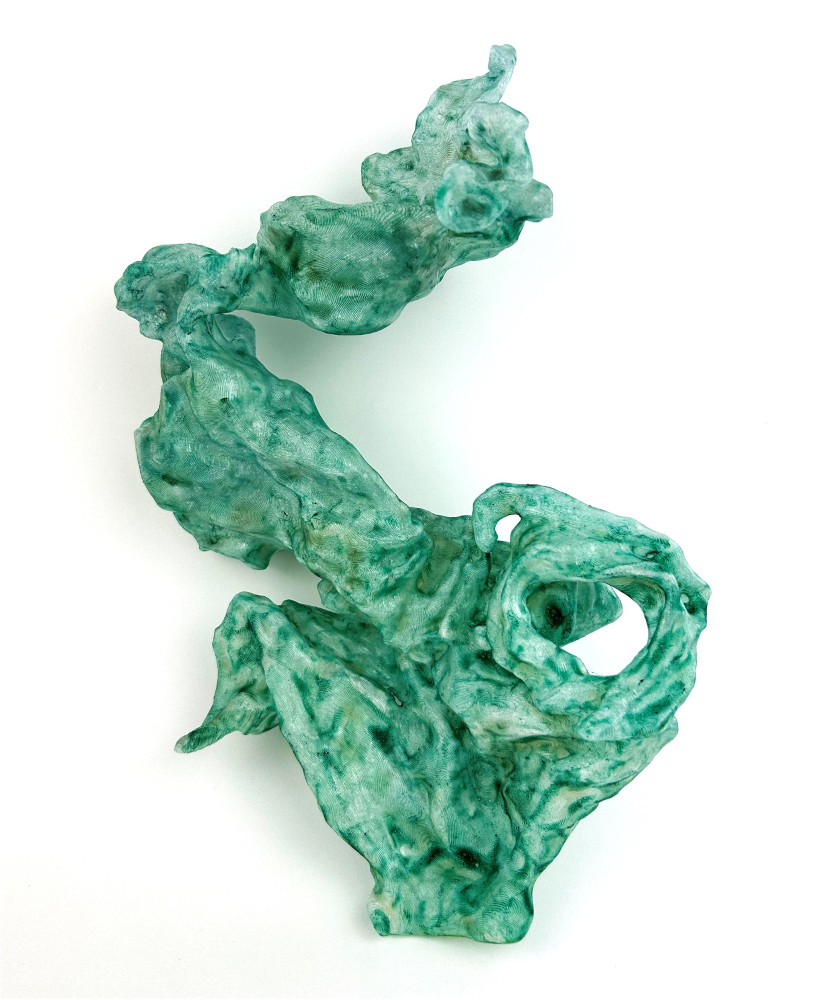
Knowledge from Nostoc #2
3D printed translucent PLA, cyanobacterial varnish
11 x 30 x 24 cm
2026
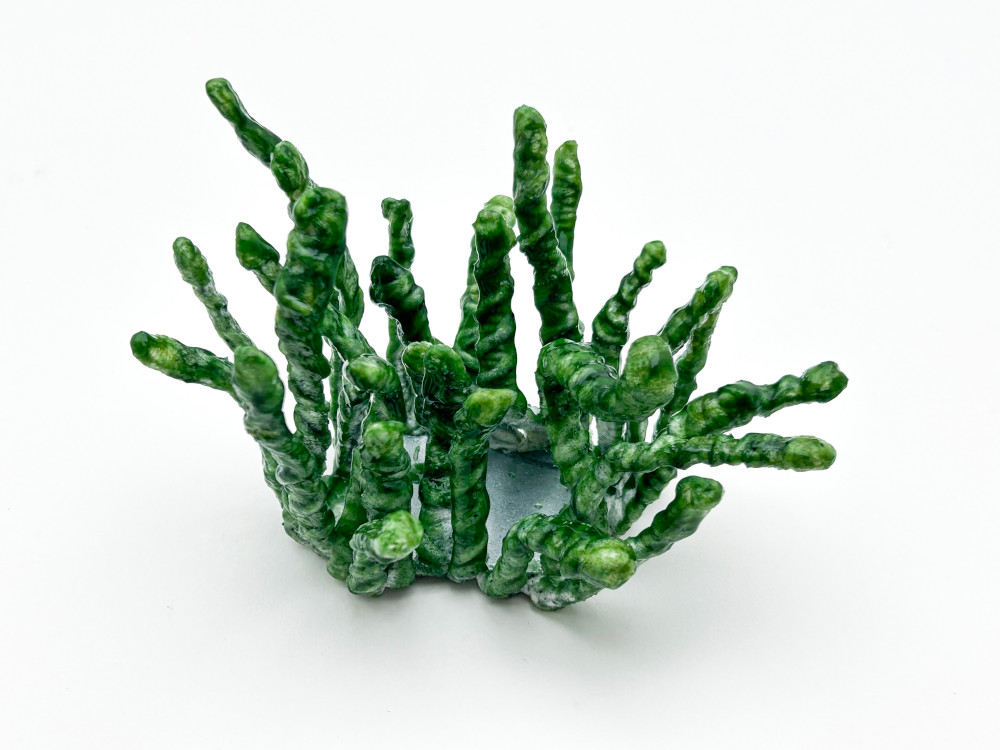
Entangled Crown #1
Galvanised steel, biodegradable mesh, cyanobacterial varnish
13 x 16 x 15 cm
2026
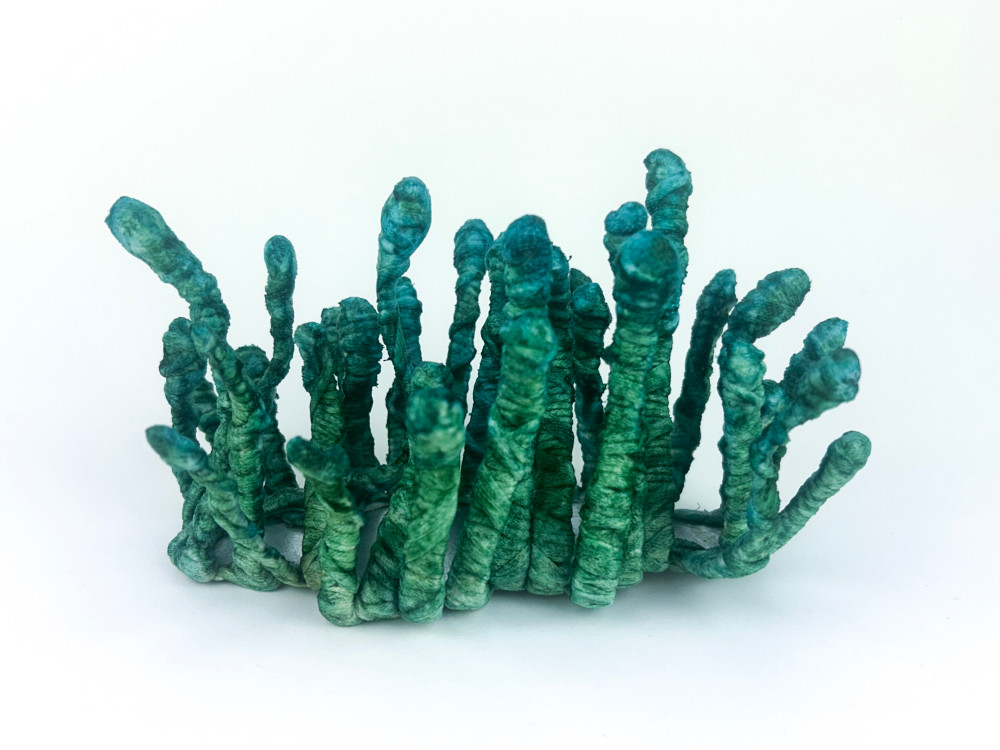
Entangled Crown #2
Galvanised steel, biodegradable mesh, cyanobacterial varnish
14 x 20 x 15 cm
2026
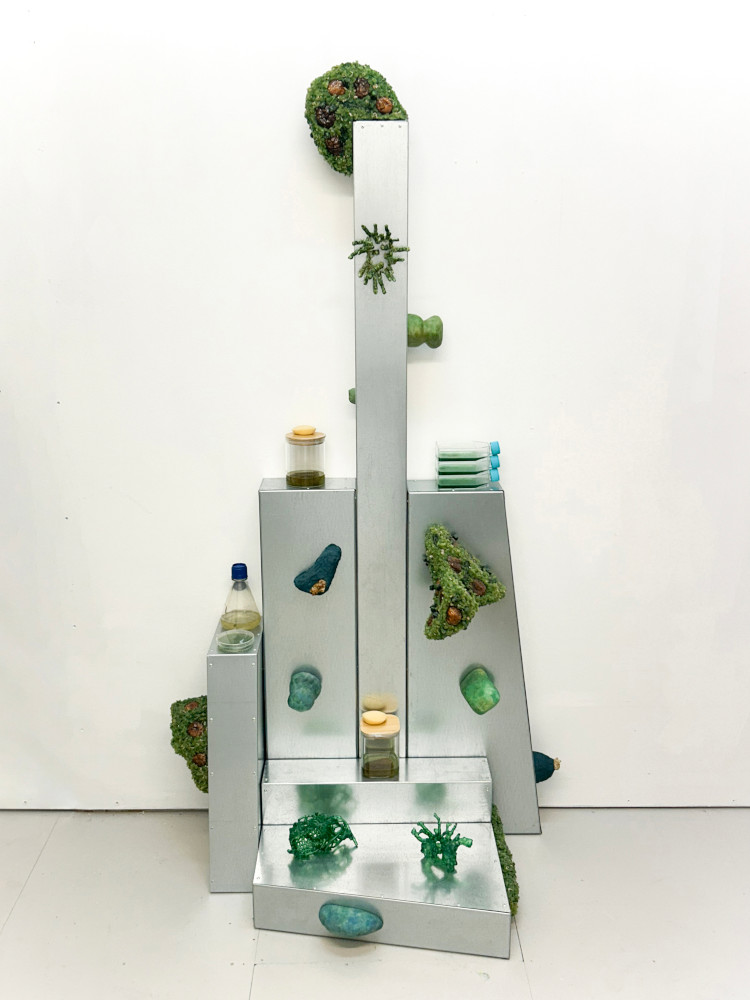
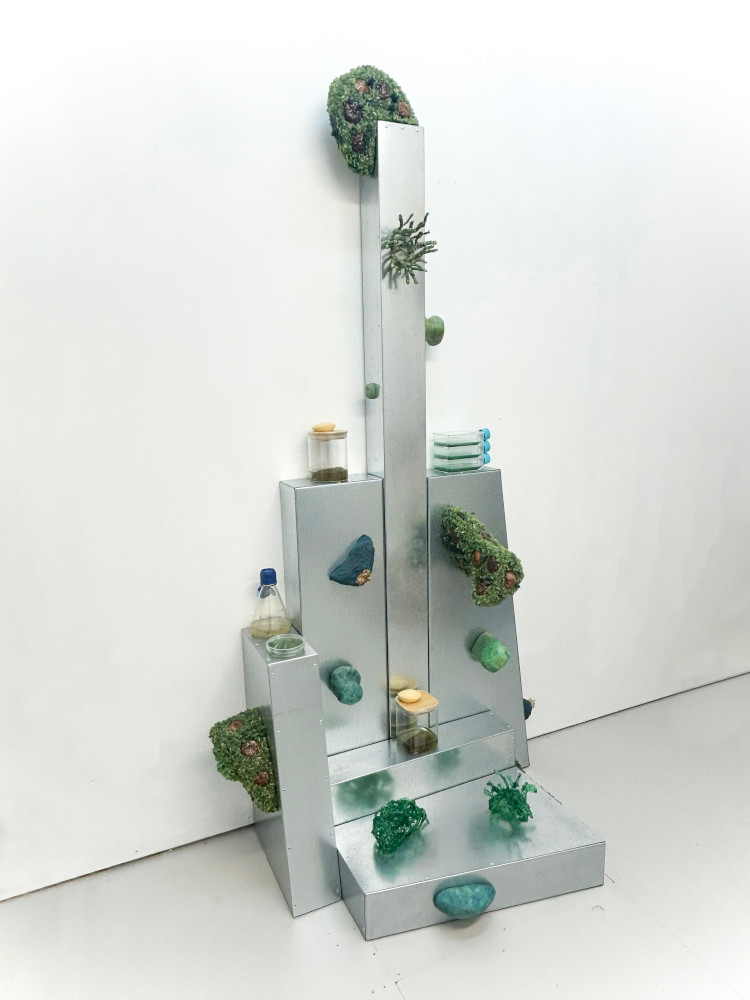
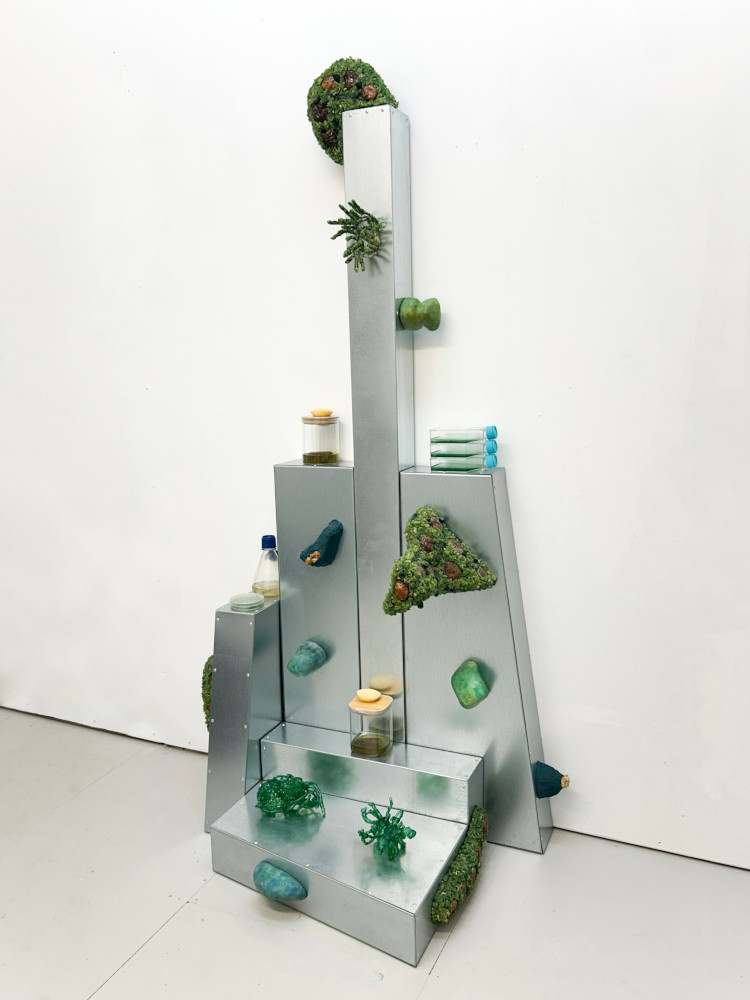
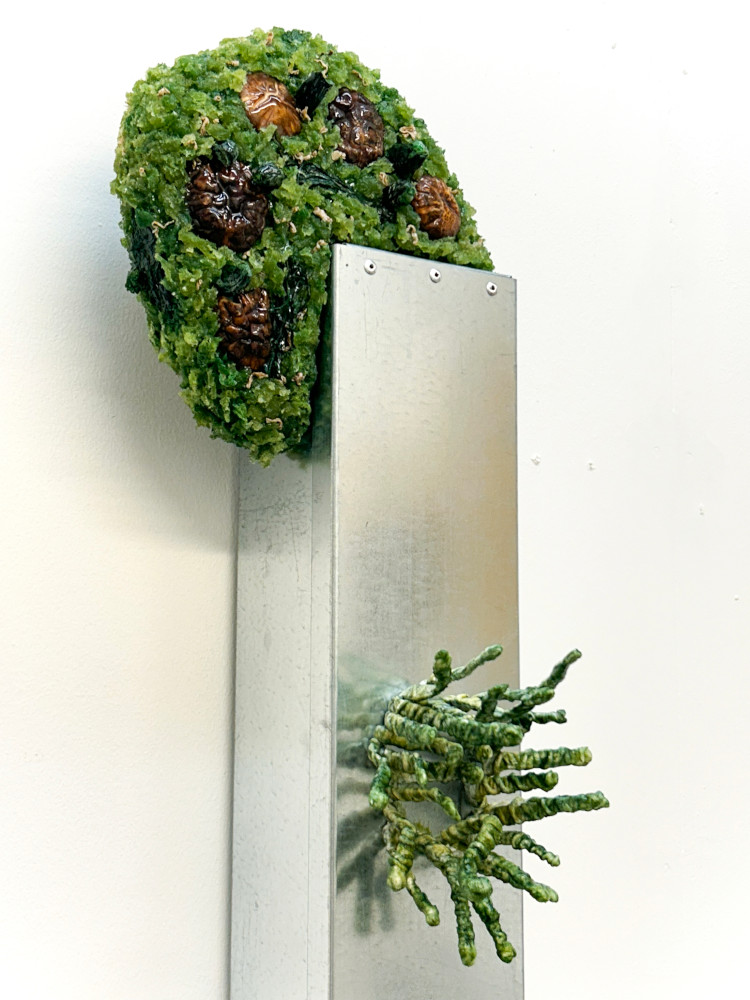
Magnetic Combo: Cyanos #1
Galvanised steel, acrylic, glass, bamboo, Styrofoam, sea sponge, fungi, seaweed, watercolour, epoxy resin, living cyanobacteria, loofah, agar, dried spirulina, Citrine, grout, fibreglass, magnets, biodegradable mesh, starch paste, paint.
199 x 108 x 63 cm
2026

Room Bloom
2025
In this fantastical visualisation, cyanobacteria colonise a conference room, imagining how immersive XR cyanobacterial ‘bloom spaces’ could offer audiences adaptive cyanobacteria encounters. The aim is for the audience to engage with the captivating forms, colours and textures of cyanobacterial growth. Using aesthetic strategies to evoke wonder and empathy, the intention is to celebrate cyanobacteria as primary producers and spatial pioneers.


Cyanobiont (Revoluta)
Galvanised steel, aluminium mesh, cyanobacteria macro-colonies, plywood, magnets, Styrofoam, foam armour, oil paints
45 x 38 x 34 cm
2024
Cyanobiont (Revoluta) is a sculptural enquiry into incorporating terrestrial cyanobacteria as living materials for sculpture. The sculpture was inspired by the hidden presence of cyanobacteria in plant roots common in the UK including Cycads and Gunnera.
Cyanobionts are cyanobacteria that live in symbiosis with a wide range of organisms such as plants, fungi and other microorganisms. Cyanobacteria are known for endosymbiosis with the ancient plant Cycas Revoluta, which rely on cyanobacteria in their coralloid roots for nitrogen fixation. The sculpture Cyanobiont (Revoluta) has refillable ‘pods’ which contain dry, dormant colonies of cyanobacteria, which could have the power to return to photosynthesis if rehydrated.


Trichomic Breath
SLA resin, dye
14.5 x 10.5 x 15cm
2025

Reticulate Bloom
SLA resin, dye
17 x 11 x 10cm
2025
Trichomic Breath and Reticulate Bloom are 3D printed resin sculptures developed from laboratory observations of filamentous cyanobacteria. Cyanobacteria are photosynthesising microorganisms that build extraordinary colonies of manifold scales, forms and textures, from tough strands to jellylike blobs, spheres and waves. For billions of years, ubiquitous cyanobacteria have been oxygenating and shaping our ecosystems, creating matter from sunlight, atmospheric carbon and nitrogen.

Selected experiments with living Spirulina, 2023-2024.

Selected images of cyanobacteria in the Grow Lab, 2024-25.

Selected images of cyanobacteria in Cambridge Herbarium, 2025.

Selected images of biogeological cyanobacteria. Sources accessed 2025: stromatolite, lakebed, rock, soil, cave, biomineral.

Selected images of cyanobacteria in symbiosis with other organisms (cyanobionts). Sources accessed 2024-5: tunicate, dinoflagellate, cycad, lichen, fern, gunnera.


Nostoc Sensing Light and Stone
Carved limestone, Nostoc Commune macro-colonies, limestone fragments, soil, natural paint made with colours derived from spirulina, phycocyanin, turmeric, beetroot
28.5 x 25.5 x 22.5 cm
2023
Cyanobacteria are blue-green microorganisms containing the pigments chlorophyll and phycocyanin. Evolving over 3.5 billion years ago, they were the originators of oxygenic photosynthesis, enabling all aerobic life forms since the Great Oxidation Event. The sculpture Nostoc Sensing Light and Stone has been inspired by the cyanobacteria species Nostoc Commune's incredible ability to repeatedly desiccate and regenerate in the presence of water, resulting in a sculpture that is (metabolically) alive if wetted, and in suspended animation whilst dried in storage. Limestone is a traditional material for sculpture and architecture and is a natural substrate for Nostoc Commune. The carved forms of Nostoc Sensing Light and Stone are based on a chemical diagram of photosynthesis. Nostoc Commune is often considered a common garden pest in the West but is eaten as a culinary delicacy in parts of Asia. Nostoc Commune’s appearance is culturally noteworthy as the inspiration behind the classic sci-fi movie ‘The Blob’.


Cycas Cyanobiont
Painted fibreglass, Cycas Revoluta
61 x 43 x 36 cm
2024
Cycas Revoluta belongs to an ancient group of plant species called the Cycads. Cycads are assumed to have coexisted with dinosaurs so are often referred to as “living fossils”. Cycads form symbiotic associations with cyanobacteria in specialized structures called coralloid roots. The sculpture Cycas Cyanobiont was inspired by scientific research and diagrams of antiviral compounds derived from cyanobacteria.